

The Learning Gardens
min read
Growing Minds, Healing Land: The Learning Gardens of East Texas
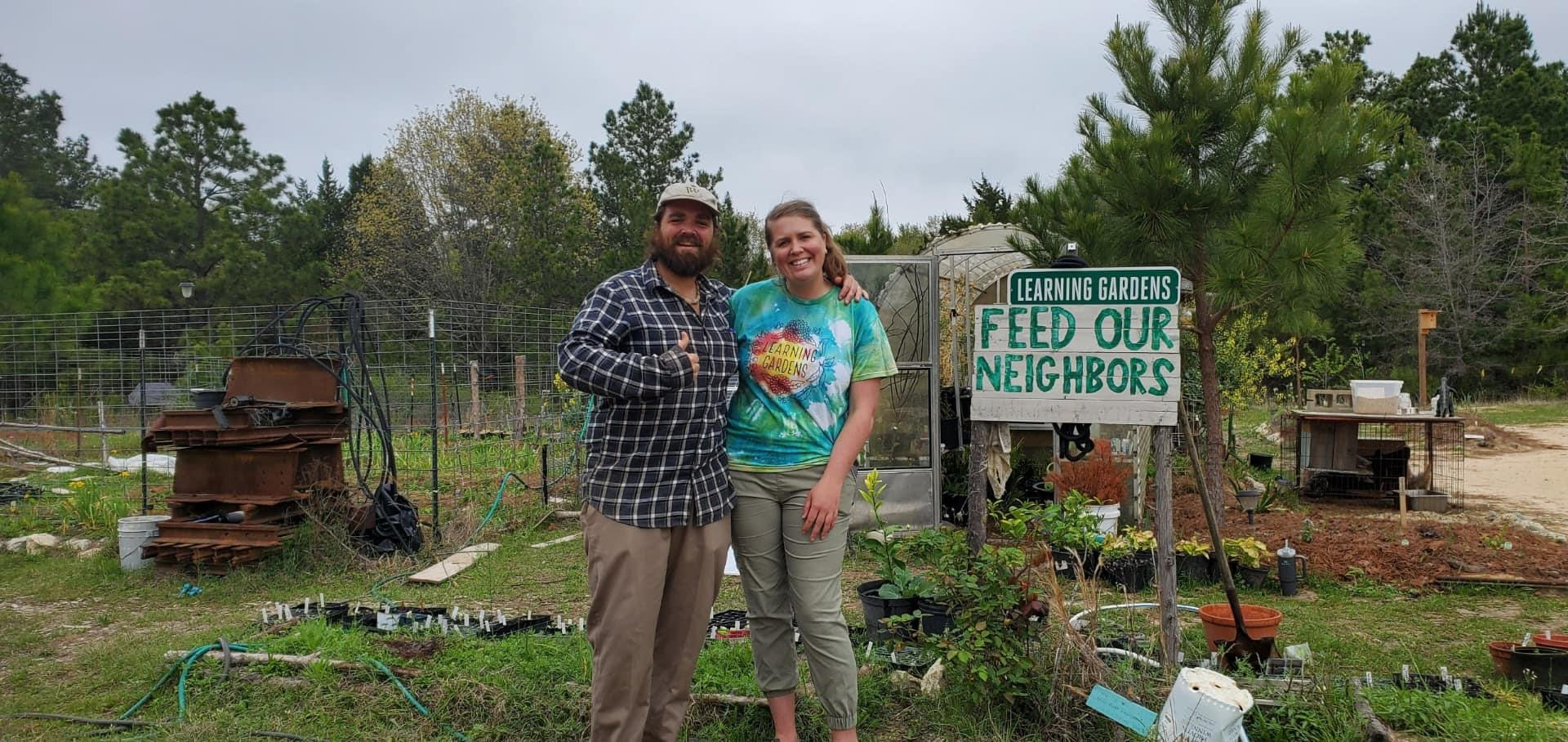
There is a piece of land near Athens, Texas that tells two stories at once. The first is a story of extraction: for decades, it served as part of the ACME Brick Company’s sand and clay quarry operations, and by the time it changed hands, much of it had been reduced to what the organization now candidly describes as “degraded wasteland.” The second story is still being written, and it is considerably more hopeful. Today, that land is home to The Learning Gardens, an off-grid permaculture farm and outdoor education nonprofit that is, acre by acre and season by season, working to restore what was lost and to share every hard-won lesson with anyone willing to show up and get their hands dirty.
“While growing food is at the heart of what we do,” the organization’s Vision states, “growing minds is equally important.”
Land With a History Worth Honoring
Before The Learning Gardens and before the ACME quarry, this land was home to the Caddo people. The Caddo were skilled farmers, foragers, and land stewards who cultivated corn, beans, and squash while hunting, fishing, and gathering wild plants in harmony with the seasons. The entire mission of The Learning Gardens – to preserve sustainable ways of living through permaculture, outdoor education, and hands-on exploration – is animated by the same underlying conviction the Caddo practiced for generations: that humans are not separate from the land, but in relationship with it, and that relationship carries responsibilities.
That conviction is now being put to work on CRC Farm, the property where The Learning Gardens operates in partnership with CRC. Through regenerative agriculture practices, the team is actively restoring the soil, rebuilding native ecosystems, and returning the land to what they describe as “a thriving natural state.” The farm itself becomes evidence of the organization’s central argument: that healing is possible, and that communities can come together and learn how to do it.
A Curriculum Written by the Land
As a 501(c)(3) nonprofit, The Learning Gardens offers free and low-cost programming designed to reach people of all ages, and the range of learning opportunities on the property reflects a commitment to education that is genuinely experiential rather than merely instructional. Participants engage in activities including nature journaling, habitat restoration, food growing, and traditional skills such as fire building, natural dyeing, and water conservation. This hands-on outdoor learning embraces “the magic of nature as our classroom” and is exactly the kind of extended time outdoors that builds genuine familiarity with the living world. In an era defined by screens and structured schedules, giving people the space to develop real competence and confidence outdoors is no small thing.
The Texas Permaculture Expo: Building a Regional Community of Practice
Once a year, The Learning Gardens opens its gates to something larger: the Texas Permaculture Expo, a multi-day gathering that brings together practitioners, educators, vendors, performers, and curious newcomers around a shared focus on sustainable living and land stewardship. Now heading into its third year in November 2026, with the theme Keep It Growing, the Expo reflects the organization’s understanding that individual learning is powerful, but community learning is transformative. The event welcomes sustainability enthusiasts of all kinds, and this year will feature a spotlight on SKIP (Skills to Inherit Property), a program designed to give people hands-on, practical skills for building a sustainable future.
Learn more about the Texas Permaculture Expo HERE
Volunteering as Immersion
For those who want to go deeper than a workshop or a field trip, The Learning Gardens offers robust volunteer opportunities, and the list of projects available reveals just how comprehensively the organization is building its off-grid vision. Volunteers might spend their time working in the gardens, saving seeds, starting seedlings, propagating plants and trees, or managing composting systems. They might work on rainwater catchment systems, solar power installations, or irrigation infrastructure. They might help finish construction projects or care for the farm’s chickens, turkeys, guineas, ducks, and bees. There is always a long list of possibilities to collaborate with The Learning Gardens and an even longer list of lessons to learn from the land.
The organization offers three tiers of engagement: local volunteers who come for day trips, short-term volunteers who stay for up to a week (contributing at least 14 hours of work, with access to lodging and an outdoor kitchen), and long-term volunteers who, after completing a short-term stay, may apply for extended residency.
It is, in the most practical sense, an invitation to live the mission. What unites every dimension of The Learning Gardens is that sustainability is not an abstract ideal but a daily practice, and that practice is best learned in community, on the land, with your hands.
To learn more about The Learning Gardens, explore upcoming programs, or get involved, visit www.lgetx.org.