

BEAM Circular
min read
Turning Waste Into Wealth: How BEAM Circular Is Building a New Bioeconomy
In California’s North San Joaquin Valley, where orchards stretch to the horizon and agricultural abundance defines daily life, a quiet revolution is taking shape. It’s not happening in Silicon Valley boardrooms or coastal innovation hubs. Instead, it’s unfolding in fields, community colleges, research labs, and small businesses: places where waste has long been seen as an inevitable byproduct of prosperity. BEAM Circular believes that waste is not a burden. It’s an opportunity. The nonprofit organization is pioneering a new model for regional economic development, one that transforms food waste, agricultural side streams, and forestry residues into high‑value products like bio‑based materials,
chemicals, energy, and even food ingredients. Their mission is bold: to accelerate the circular bioeconomy and prove that communities can build prosperity while stewarding natural resources.
And if they succeed, the North San Joaquin Valley won’t just be a participant in the bioeconomy. It will be a global leader.
A New Vision for Waste and Opportunity
BEAM Circular’s name says everything about its purpose. “BEAM” stands for BioEconomy, Agriculture & Manufacturing, the three pillars that define the region’s economic identity. “Circular” reflects the organization’s commitment to reducing waste, repurposing resources, and building systems that regenerate rather than deplete. Their approach is refreshingly practical. Instead of chasing theoretical solutions or futuristic technologies, BEAM Circular focuses on what communities can do now, with the resources, partners, and talent they already have. At its core, the organization is a connector. It brings together farmers, scientists, manufacturers, educators, policymakers, and investors to build a shared vision for a circular bioeconomy. This collaborative model is the foundation of BEAM’s mission and the reason their work is gaining national attention.
Why the North San Joaquin Valley?
California’s North San Joaquin Valley is uniquely positioned to lead the next wave of sustainable biomanufacturing. The region produces enormous volumes of organic material like orchard trimmings, crop residues, food processing byproducts, and forestry waste. Historically, much of this material has been burned, landfilled, or left to decompose.
But in a circular bioeconomy, these materials become feedstocks for new industries.
Imagine almond shells becoming biodegradable packaging. Tomato skins becoming natural pigments. Orchard prunings becoming renewable fuels. Food waste becoming high‑value proteins or soil amendments.
This is not science fiction. It’s the future BEAM Circular is building.
Their regional strategy is designed to catalyze circular bioeconomy development at a scale the U.S. has never seen before. And because the model is community‑driven, it promises not just environmental benefits but also economic resilience and shared prosperity.
The CBIO Collaborative: A Regional Ecosystem in Motion
At the heart of BEAM Circular’s work is the CBIO Collaborative (Circular Bioeconomy Innovation Collaborative), a growing ecosystem of regional partners that includes industry leaders, scientists, educators, workforce development organizations, community advocates, capital providers, and policymakers.
Together, these partners are building the infrastructure, talent pipelines, and market pathways needed to scale sustainable biomanufacturing. They’re identifying new uses for biomass, developing technologies that convert waste into valuable products, and ensuring that local workers have the skills to participate in the emerging bioeconomy.
The CBIO Collaborative is a model for how regions can build innovation ecosystems that are inclusive, resilient, and grounded in local priorities.
Bio Circular Valley: A Digital Platform for a New Marketplace
One of BEAM Circular’s most ambitious initiatives is BioCircular Valley, a digital platform designed to accelerate the commoditization of non‑food biomass in the region. Think of it as a marketplace meets a data engine.
Bio Circular Valley maps available biomass – everything from orchard residues to food processing byproducts – and connects it with companies that can convert it into bio‑based products. The platform helps identify supply chain gaps, match feedstocks with technologies, and streamline the flow of materials across the region.
The goal is simple: make it easier, faster, and more profitable for businesses to turn waste into opportunity.
This platform is being developed in partnership with BEAM Circular, the U.S. Department of Agriculture, UC Merced, UC Berkeley, Lawrence Berkeley National Laboratory, and the University of California Agriculture and Natural Resources. It’s a powerhouse coalition with the expertise to reshape how biomass is valued and utilized.
The Innovation Campus: A Global Center for Zero‑Waste Biomanufacturing
If BEAM Circular’s digital platform is the brain of the operation, the Innovation Campus will be its beating heart.
This planned global center of excellence will provide shared equipment, flexible infrastructure, and co‑location opportunities for companies working on zero‑waste biomanufacturing. It’s designed to accommodate technologies at various stages of development and to support a wide range of feedstocks, such as agricultural residues, food waste, and woody biomass.
The campus will also integrate closely with local workforce development programs, ensuring that residents have access to training and career pathways in the bioeconomy. Imagine a place where startups, researchers, manufacturers, and farmers collaborate under one roof to build the next generation of sustainable products. That’s the Innovation Campus.
BioCatalyst: The Annual Gathering Driving the Movement Forward
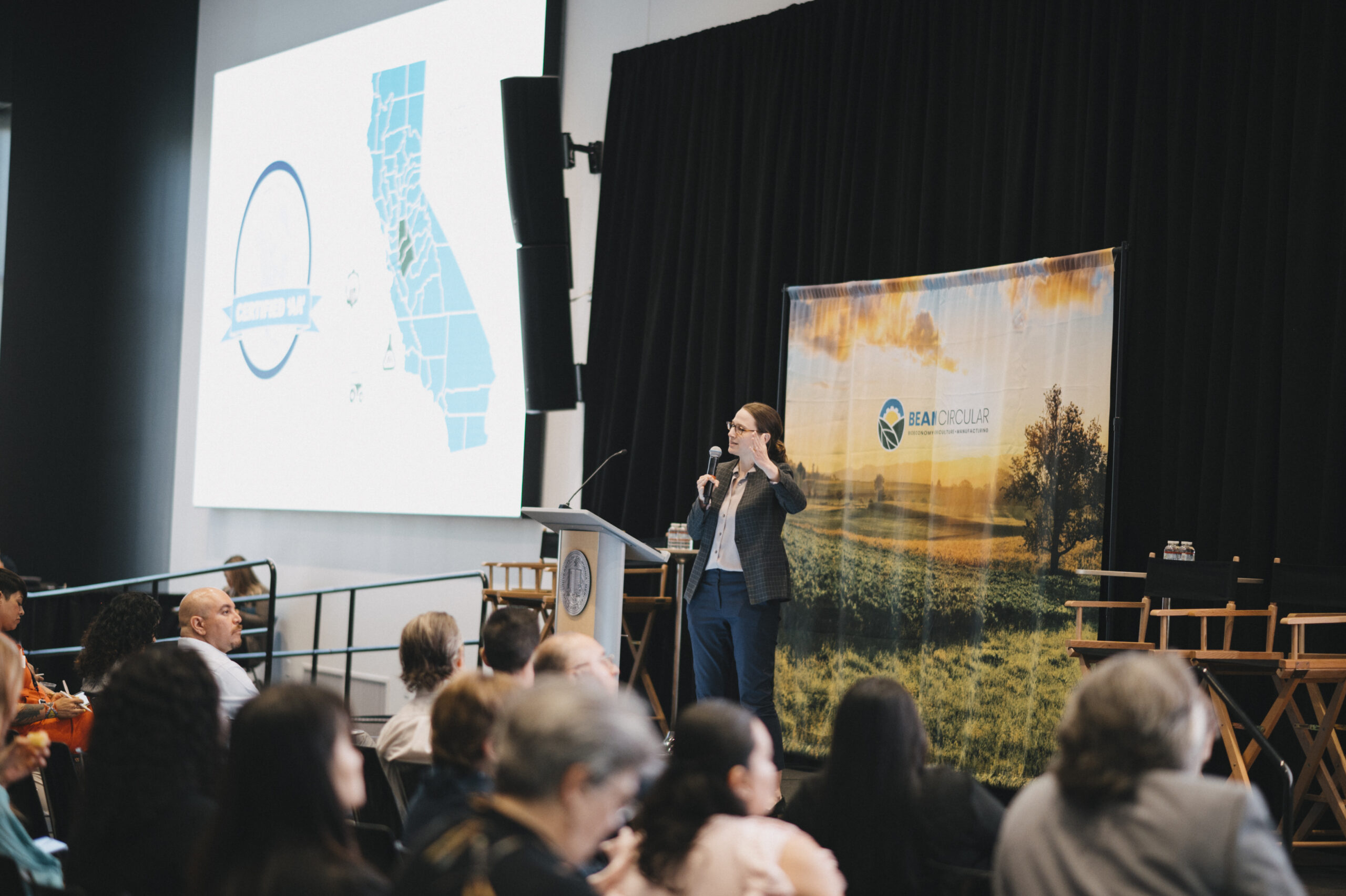
Each year, BEAM Circular and gener8tor host BioCatalyst: Industry and Innovation Exchange, the organization’s premier annual gathering. This high‑impact event brings together industry leaders, investors, innovators, and community partners to accelerate the circular bioeconomy in California and beyond.
BioCatalyst is where ideas become partnerships, and partnerships become projects.
The event showcases cutting‑edge technologies, emerging market opportunities, and collaborative pathways to transform organic waste into new bio‑based products. One of the highlights is the live pitch session featuring innovators from BEAM Circular’s Accelerator program, developed in partnership with gener8tor.
If you’re interested in attending or learning more, you can visit www.beamcircular.org/biocatalyst.
A Future Built on Collaboration, Innovation, and Community
BEAM Circular is proving that the future of sustainable manufacturing doesn’t belong only to tech giants or coastal innovation hubs. It belongs to communities, especially those rooted in agriculture, industry, and natural resource stewardship. By transforming waste into opportunity, BEAM Circular is building a model for economic resilience that other regions can follow. Their work shows that environmental sustainability and economic prosperity aren’t competing goals. They’re deeply intertwined.
And in the North San Joaquin Valley, that future is already taking shape.